
How Do You Wash Waffle Weave Towels Without Ruining Them?
Last Updated: November 15, 2026
Quick Summary
Wash waffle weave towels in cold or warm water with about half the usual dose of liquid detergent, no fabric softener, and oxygen bleach only if needed. Run a gentle cycle with a low spin, add an extra rinse, then tumble dry on low heat or line dry.
- Sort waffle weave towels away from jeans, zippers, and Velcro, which snag the loose weave.
- Powder detergent can lodge in the waffle pockets and leave chalky residue, so use liquid.
- Wash new waffle weave towels once in cold water before first use to remove sizing.
- Set the dryer to low or delicate, roughly 125-135°F, and use the moisture-sensor setting.
- Skip dryer sheets and never iron a waffle weave towel, since both flatten or coat the texture.
Table of Contents
- How to Wash Waffle Weave Towels in a Washing Machine
- Washing New Waffle Weave Towels Before First Use
- How to Dry Waffle Weave Towels Without Killing Absorbency
- Waffle Weave Towels for Glass: Getting a Streak-Free Finish
- Common Mistakes That Ruin Waffle Weave Towels
- Troubleshooting Stiff, Linty, Smelly, or Streaking Towels
- Shop Waffle Weave Towels That Hold Up to Real Laundry Days
- Frequently Asked Questions
How to Wash Waffle Weave Towels in a Washing Machine
Waffle weave towels are a favorite in our kitchen for one reason: those little honeycomb pockets trap water fast and release it just as quickly. But that same texture is why so many towels go stiff and scratchy after a few months. We have strong opinions about how to wash waffle weave towels without flattening the weave or killing absorbency.
The short version: cold or warm water, a small amount of liquid detergent, no fabric softener, and low heat. That is it. Below, we walk through the full process step by step, including the parts most care guides skip.
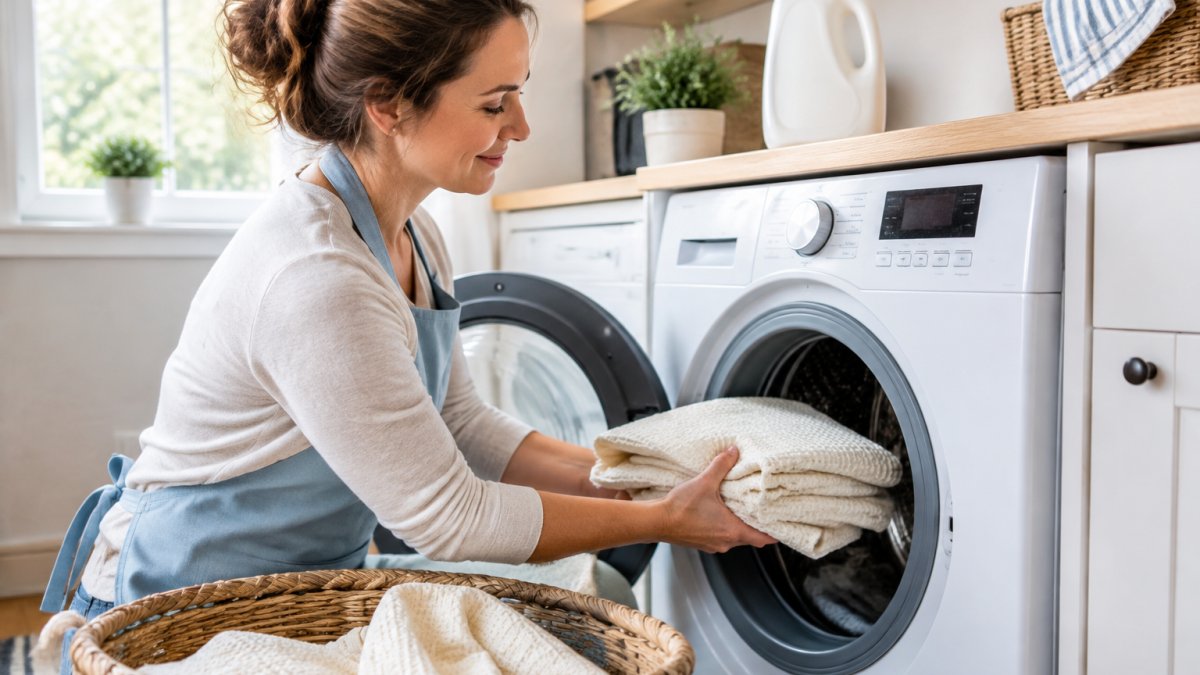
Step 1: Sort and Pre-Treat Heavily Soiled Towels
Start by sorting. Keep waffle weave towels apart from jeans, zippers, and anything with Velcro. Those hard edges snag the loose weave and pull threads that turn into runs.
For heavily soiled towels, pre-treat before washing:
- Blot grease and oil with a dry cloth first, then work in a drop of dish soap
- Soak stained towels in warm water with a scoop of oxygen bleach for 30 minutes
- Never scrub the weave with a stiff brush; it crushes the texture
Skip the pre-soak for everyday towels. It adds wear without adding much clean.
Step 2: Choose the Right Detergent and Water Temperature
Use a small amount of liquid detergent. Powder can lodge in the waffle pockets and leave a chalky residue that shows up later as streaks on glass.
Here is how we set the machine:
| Setting | Recommendation | Why It Matters |
|---|---|---|
| Water temperature | Cold wash or warm water | Hot water sets stains and shrinks fibers |
| Detergent | Liquid, about half the usual dose | Residue dulls absorbency |
| Fabric softener | None | Coats fibers and blocks water |
| Bleach | Oxygen bleach only | Chlorine breaks down the fiber |
| Extra rinse | On | Flushes out trapped soap |
Step 3: Set the Cycle and Load Size
Pick a gentle or normal cycle with a low spin. A half-full drum gives towels room to move, which is what actually gets them clean.
Overloading is the most common mistake we see. Towels need to tumble, not pack.
Washing New Waffle Weave Towels Before First Use
Washing new waffle weave towels before first use is worth the extra load. New towels often carry sizing and manufacturing residue that blocks absorbency until it washes out.
Run one cold cycle with a small amount of liquid detergent and no softener. Tumble dry low or line dry. After that first wash, the weave opens up and starts drinking water the way it should.
One note on construction: our towels are 375 GSM waffle weave microfiber made from recycled plastic bottles, and the care label matters more than any general rule. Check the tag on whatever you buy. Manufacturers build in exceptions, and the label always wins.
How to Dry Waffle Weave Towels Without Killing Absorbency
Low heat is the answer, but "low" needs a number to be useful. Set the dryer to its low or delicate cycle, which on most residential dryers runs roughly 125-135°F, and use the moisture-sensor setting rather than a timed cycle so the towels stop when they are dry instead of baking. High heat, the 150°F-and-up range on a normal cycle, is what turns soft waffle weave into sandpaper and can damage microfiber fibers.
The right drying method depends on the fiber:
- Cotton waffle weave: Tumble dry low, or line dry. Cotton can take a slightly warmer low setting and benefits from a good shake before it goes in to open the pockets. Pull it out while barely damp and hang to finish so the weave does not over-dry and stiffen.
- Microfiber waffle weave: Tumble dry low or air-dry only. Microfiber holds heat, so a low setting that feels gentle on cotton can still be too warm for it. Air-drying on a line or rack is the safest option and preserves absorbency longest.
A few drying rules that apply to both:
- Shake the towel out before it goes in the dryer to open the pockets
- Use dryer balls to separate layers and speed drying without added heat
- Clean the lint trap every load; waffle weave grabs lint and holds it
- Never iron a waffle weave towel; the iron flattens the texture permanently
- Skip dryer sheets entirely, they deposit the same waxy coating as liquid fabric softener
Line drying in sun does double duty: it brightens white towels and freshens musty ones. If you dry outdoors, bring towels in before they are bone dry and finish them briefly on low or hang them in a ventilated room.
If towels come out crisp and scratchy, cut the cycle short and finish on a line rather than adding more heat.
Waffle Weave Towels for Glass: Getting a Streak-Free Finish
Waffle weave towels for glass work better than most people expect, but only if the towel is clean and lint-free. The texture lifts film instead of pushing it around.
Use one towel damp for the first pass and a dry one for the buff. Skip fabric softener entirely on glass towels; that coating is the number one cause of smeared windows.
For heavy grime, a drop of vinegar in the water helps cut film without leaving residue.
Common Mistakes That Ruin Waffle Weave Towels
The fastest way to wreck a waffle weave towel is fabric softener. It coats the fibers with a waxy film that feels soft for a week and then repels water forever.
Other mistakes we see often:
- Using too much detergent, which traps soap in the weave
- Washing with heavy items that snag the loops
- Drying on high heat until bone dry
- Bleaching colored towels with chlorine
Watch out: mixing towels with a load of linty items like fleece or flannel. Waffle weave grabs lint and holds it.
Troubleshooting Stiff, Linty, Smelly, or Streaking Towels
Stiff towels usually mean detergent buildup. Run them through a rinse cycle with a cup of white vinegar, no detergent, then dry on low.
Musty smell points to damp towels left in the drum. Wash with baking soda and a normal dose of detergent, then dry fully before folding.
Lint comes from washing with shedding fabrics or overloading. Wash towels alone and clean the dryer lint trap every load.
Streaking on glass almost always traces back to softener residue or a dirty towel. Strip the towel with vinegar and start fresh.
Shop Waffle Weave Towels That Hold Up to Real Laundry Days
The best care routine in the world cannot save a poorly made towel. Look for a tight, even weave, a mid-weight fabric around 375 GSM, and a hem that will not fray after a handful of washes.
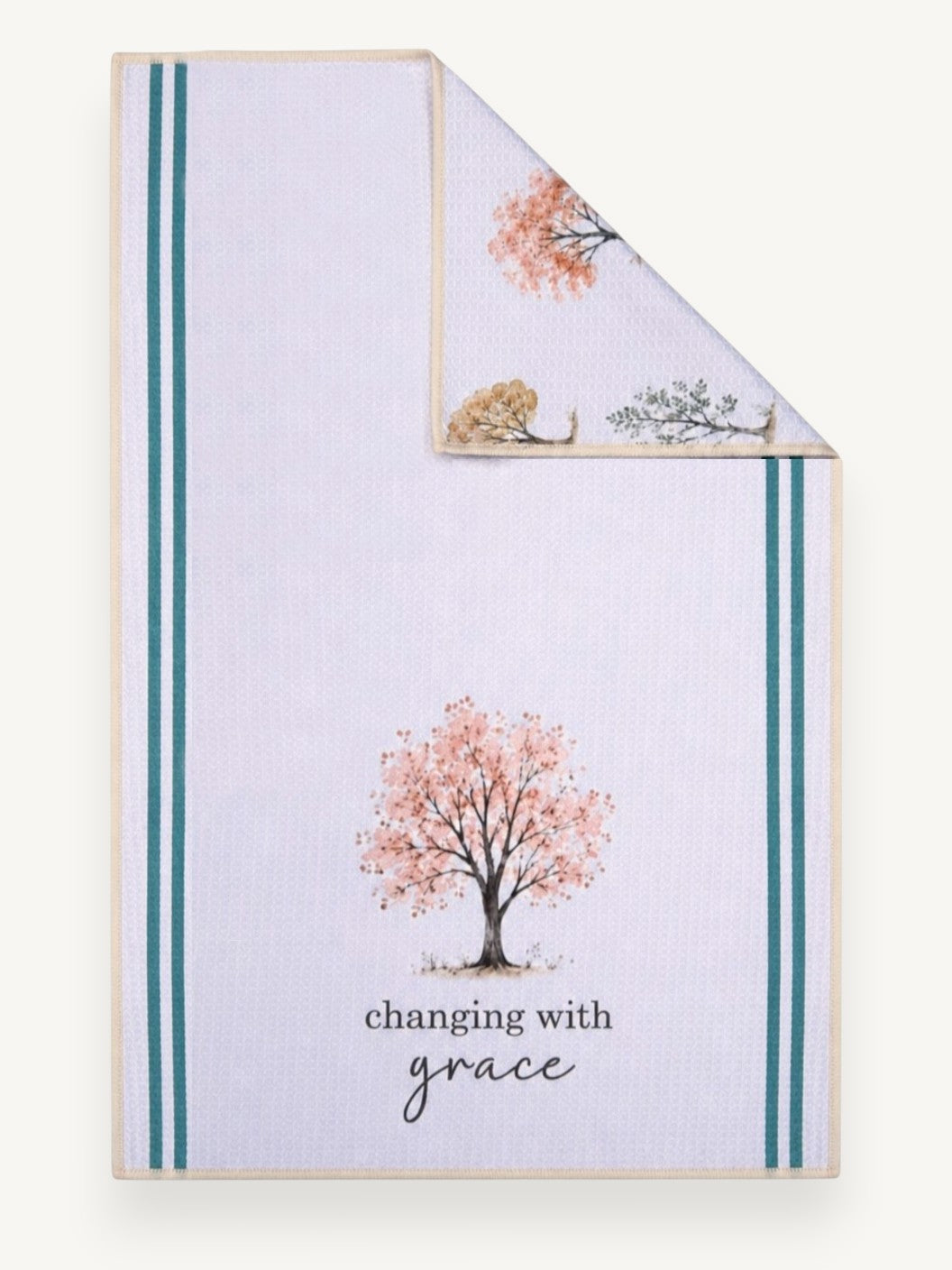
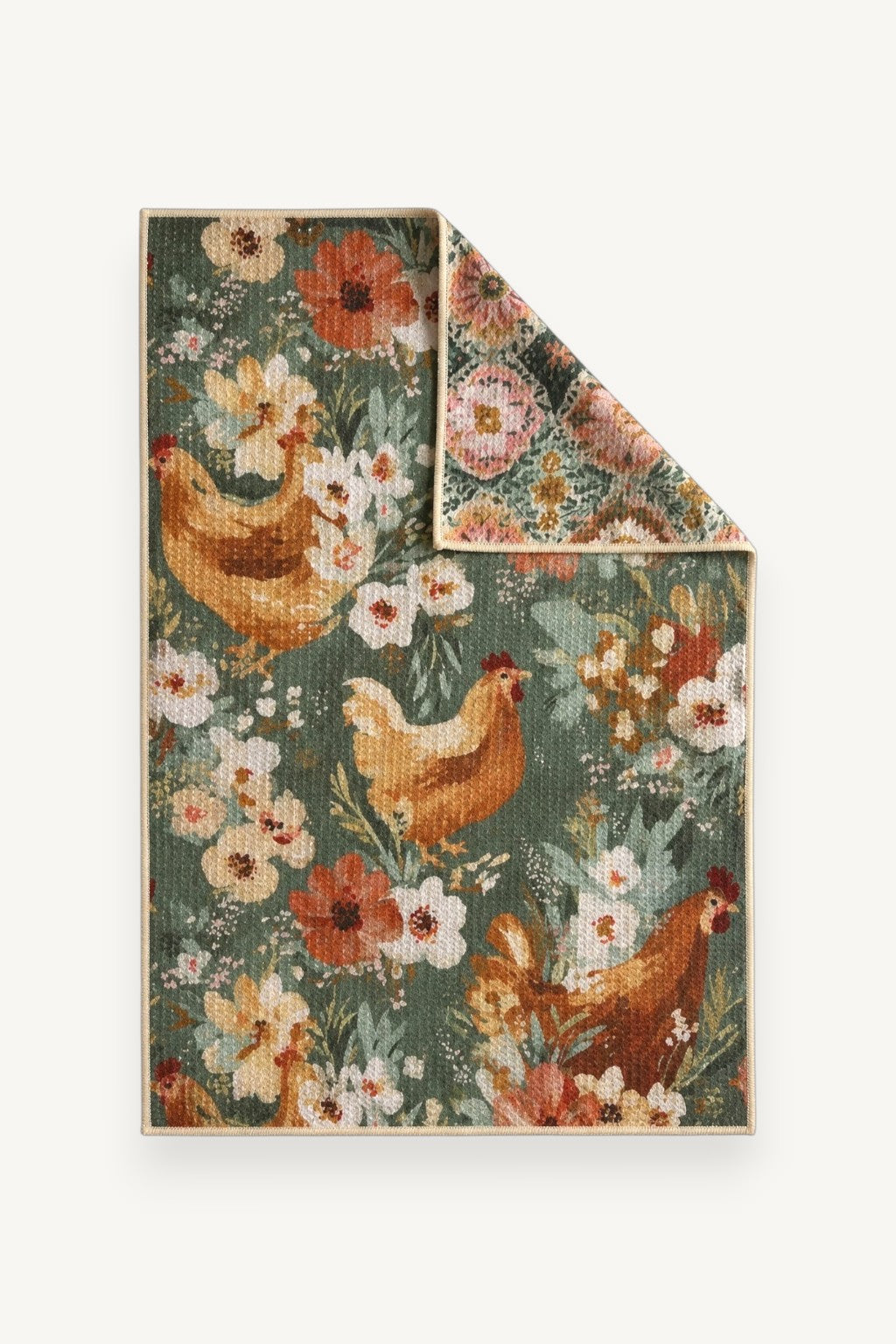
The Changing With Grace reversible waffle weave kitchen towel brings watercolor autumn trees on one side and a coordinating reverse on the other. The Golden Roost reversible waffle-weave kitchen towel suits farmhouse kitchens with golden hens on a sage background. Both are machine washable and quick drying.
If you want to compare more styles before you commit, our guide to artisan kitchen towels made in the USA walks through durable options. For a deeper dive into stain removal and fabric care, read how to clean waffle weave towels without ruining them.
Waffle weave towels reward a little patience. Wash them cool, skip the softener, dry them low, and they will stay soft and thirsty for years.
At Do Take It Personally, we design kitchen towels meant to be used, washed, and loved, not tucked away. Our waffle weave towels are made from recycled plastic bottles, machine washable, and built with a reversible design so one towel gives you two looks. Browse the full collection and find the one that fits your kitchen.
Frequently Asked Questions
Can you put waffle weave towels in the washing machine?
Yes. Machine washing is the standard care method for waffle weave towels, including the 375 GSM microfiber towels in the Do Take It Personally collection, which are listed as machine washable. Use a normal or gentle cycle with cool to warm water, a small amount of liquid detergent, and a full rinse. Skip fabric softener and dryer sheets, since both coat the fibers and reduce absorbency. Wash waffle weave towels separately from lint-shedding items like terry cloth robes or fleece blankets.
Should you wash waffle weave towels before using them for the first time?
Wash new waffle weave towels before first use. Manufacturing and shipping can leave sizing agents, dust, and handling residue on the fabric, and a first wash removes them so the towel absorbs properly. Run a single warm-water cycle with a small amount of liquid detergent and no fabric softener, then tumble dry on low or line dry. Washing new waffle weave towels first also sets up the fiber structure so the towel stays soft through repeated laundering.
How should you dry waffle weave towels to keep them absorbent?
Tumble dry on low heat or air-dry. High heat can damage microfiber fibers and make the waffle grid stiff, so keep the drying cycle low and pull towels out while slightly damp if you plan to hang them. Line drying or hanging over a rod works well because the open waffle structure releases moisture quickly. Avoid overloading the dryer, and never let towels sit damp in the drum, which traps odors. Shake towels out before drying to keep the weave from flattening.
Can you use fabric softener or vinegar on waffle weave towels?
Skip fabric softener and dryer sheets entirely. They leave a waxy film on the fibers that blocks water absorption and can cause streaking on glass. Vinegar is a better option: add about half a cup of white vinegar to the rinse cycle instead of softener to help strip detergent residue and neutralize odors. Baking soda can be added to the wash cycle for heavily soiled towels. Use both sparingly and never mix them in the same compartment, since they cancel each other out.

