
How to Clean Waffle Weave Towels Without Ruining Them
Last Updated: November 14, 2026
Quick Summary
To clean waffle weave towels without damaging them, wash them in liquid detergent with warm or cool water, skip fabric softener, and dry on low heat or air dry. Wash microfiber towels only with other microfiber, and avoid hot water and bleach, which can flatten the pockets and reduce absorbency.
- Check the care label first for fiber content and safe wash and dry settings.
- Use cool or warm water for most loads, and avoid water hotter than roughly 120°F.
- Use 1 to 2 tablespoons of liquid detergent for a small load and no more than half the cap for a full load.
- Leave the fabric softener compartment empty, since softener blocks absorption and leaves streaks.
- Dry on low heat or air dry, because high heat flattens the waffle texture and can damage microfiber.
Table of Contents
- What Waffle Weave Towels Are Made Of and Why Care Matters
- How to Wash New Waffle Towels Before First Use
- How to Clean Microfiber Waffle Weave Towels Step by Step
- How to Dry Waffle Weave Towels Without Heat Damage
- How to Keep Kitchen Towels Absorbent Over Time
- Troubleshooting Streaks, Lint, Odors, and Dye Transfer
- Keeping Your Clean Towels Ready for Your Next Gift or Kitchen
- Frequently Asked Questions
What Waffle Weave Towels Are Made Of and Why Care Matters
Clean waffle weave towels get their pocketed texture from a grid of raised squares. That texture soaks up water fast, but it also traps lint, soap residue and oil. Care matters because the wrong wash routine can flatten those pockets and cut absorbency within a few cycles.
Many of the towels in our kitchen collection, including the ones at Do Take It Personally, are made from waffle-weave microfiber. Microfiber is a synthetic fiber, so it reacts badly to high heat and fabric softener. Treat it gently and it stays soft and absorbent for a long time.
Common waffle weave towels include:
- Cotton waffle weave: Natural fiber, usually fine with warm water and regular detergent.
- Microfiber waffle weave: Synthetic, needs cool or warm water, low heat and no softener.
- Blended towels: Follow the care label, since the fiber mix decides the rules.
Check the care label first. It tells you the fiber content and the safest wash and dry settings for that towel.
How to Wash New Waffle Towels Before First Use
Wash new towels before the first use. Dust and loose fibers can cling to the surface, and a first wash removes them.
Follow these steps:
- Shake the towel out to loosen any lint.
- Wash it alone or with other new towels in the same color family.
- Use cool or warm water, never hot.
- Use a small amount of liquid detergent. Skip the fabric softener.
- Air dry or tumble on low heat.
A first wash also shows you how the towel behaves in your machine. If the color bleeds, rewash it on its own.
How to Clean Microfiber Waffle Weave Towels Step by Step
Regular cleaning keeps the pockets open and the towel absorbent, so clean waffle weave towels stay effective. Use this routine for everyday kitchen use, and treat the care label as the final authority whenever it disagrees with general advice.
- Sort by fiber and soil level. Wash waffle weave microfiber only with other microfiber, not with cotton towels, denim, or fleece, which shed lint into the pockets. Keep greasy kitchen towels separate from lightly used drying towels so oil does not spread across the load.
- Shake out and pre-treat. Snap each towel outdoors or over the sink to release loose crumbs and lint. For grease or food stains, apply a drop of liquid detergent directly to the spot and let it sit for 5 to 10 minutes before washing.
- Load the drum loosely. Fill the washer no more than about two-thirds full. A common pattern is 4 to 6 kitchen towels per load in a top-loader and 6 to 8 in a front-loader; the towels should tumble freely, not pack into a dense bundle.
- Set the water temperature. Use warm water (around 90 to 100°F) for greasy kitchen towels and cool water (around 60 to 80°F) for colors, printed artwork, and lightly soiled towels. Avoid hot water above roughly 120°F, which can set grease, cause dye transfer, and stress synthetic fibers.
- Dose the detergent. Use a liquid detergent labeled for microfiber or a free-and-clear formula. Start with about 1 to 2 tablespoons for a small load and no more than half the cap for a full load. Powder detergent can leave grit in the pockets, so liquid is the safer default.
- Choose the cycle and rinse. Select a normal or gentle cycle with a full extra rinse. The extra rinse is the single most useful setting for preventing the stiff, streaky feel that comes from leftover soap.
- Add a vinegar rinse only when needed. For residue, dingy color, or a sour smell, pour about half a cup of distilled white vinegar into the fabric softener compartment or the rinse cycle. Do not mix vinegar and detergent in the same compartment, since they neutralize each other.
- Skip softener and bleach. Leave the fabric softener compartment empty. Use bleach only on white cotton waffle towels whose care label permits it, and never on microfiber or printed towels.
Choosing Water Temperature, Detergent, and Load Size
Warm water lifts kitchen grease better; cool water protects color and synthetic fibers. When in doubt, choose cool and add a pre-treatment drop of detergent rather than raising the temperature.
Match detergent to fiber. Microfiber responds best to a liquid, dye-free, softener-free formula. Cotton waffle weave can handle a standard liquid detergent. Blends should follow the care label, since the synthetic share sets the heat limit.
Keep loads moderate and consistent. Overloading is the most common cause of towels that come out still smelling of food or feeling slick, because water and detergent cannot reach the center of a packed bundle.
What to Avoid: Fabric Softener, Bleach, and Heat
Fabric softener coats fibers with a waxy film that blocks water absorption and leaves streaks on glass and counters. Skip it entirely, including softener sheets in the dryer.
Bleach breaks down fibers and fades printed artwork. Reserve it for white cotton only when the care label allows it.
High heat is the biggest risk. Hot water and hot dryers can shrink cotton, melt or flatten microfiber, and permanently crush the waffle texture.
Watch out: Running microfiber waffle weave towels through a hot dryer is the fastest way to ruin their texture and absorbency; use low heat or air dry instead.
The table below condenses the core washing settings the routine recommends, so you can check them at a glance.
| Setting | Recommended value | Note |
|---|---|---|
| Water temperature for greasy towels | Warm, around 90 to 100°F | Lifts kitchen grease |
| Water temperature for colors | Cool, around 60 to 80°F | Protects color and synthetic fibers |
| Avoid water hotter than | Roughly 120°F | Can set grease and cause dye transfer |
| Detergent for a small load | 1 to 2 tablespoons | Use liquid, not powder |
| Detergent for a full load | No more than half the cap | Prevents soap residue |
| Towels per load, top-loader | 4 to 6 | Leave room to tumble |
| Towels per load, front-loader | 6 to 8 | Leave room to tumble |
| Vinegar rinse | About half a cup | Use only when residue or odor appears |
How to Dry Waffle Weave Towels Without Heat Damage
Low or no heat keeps the pockets intact. Drying is where many towels get damaged, so take it slowly.
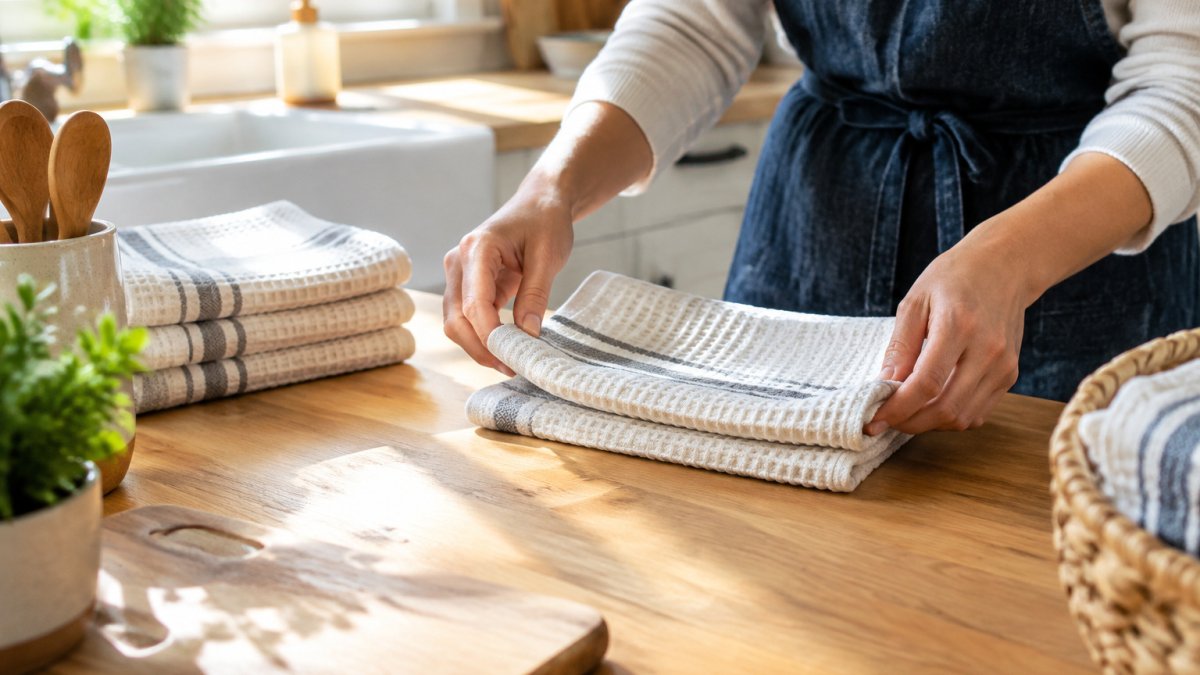
- Air dry: Hang the towel by its loop or lay it flat on a rack. This is the gentlest option.
- Tumble on low: Use the lowest heat setting. Remove the towel as soon as it is dry.
- Avoid high heat: Hot dryers flatten the waffle texture and can damage microfiber.
Shake the towel out before drying. This helps the pockets open and the fibers dry evenly.
How to Keep Kitchen Towels Absorbent Over Time
Absorbency fades when residue builds up. A few habits keep waffle weave towels working well:
- Wash towels regularly rather than letting them pile up with oil and food stains.
- Rinse out heavy grease before washing.
- Use the same detergent consistently and avoid stacking products.
- Replace towels that no longer absorb water. Worn-out towels will not recover fully.
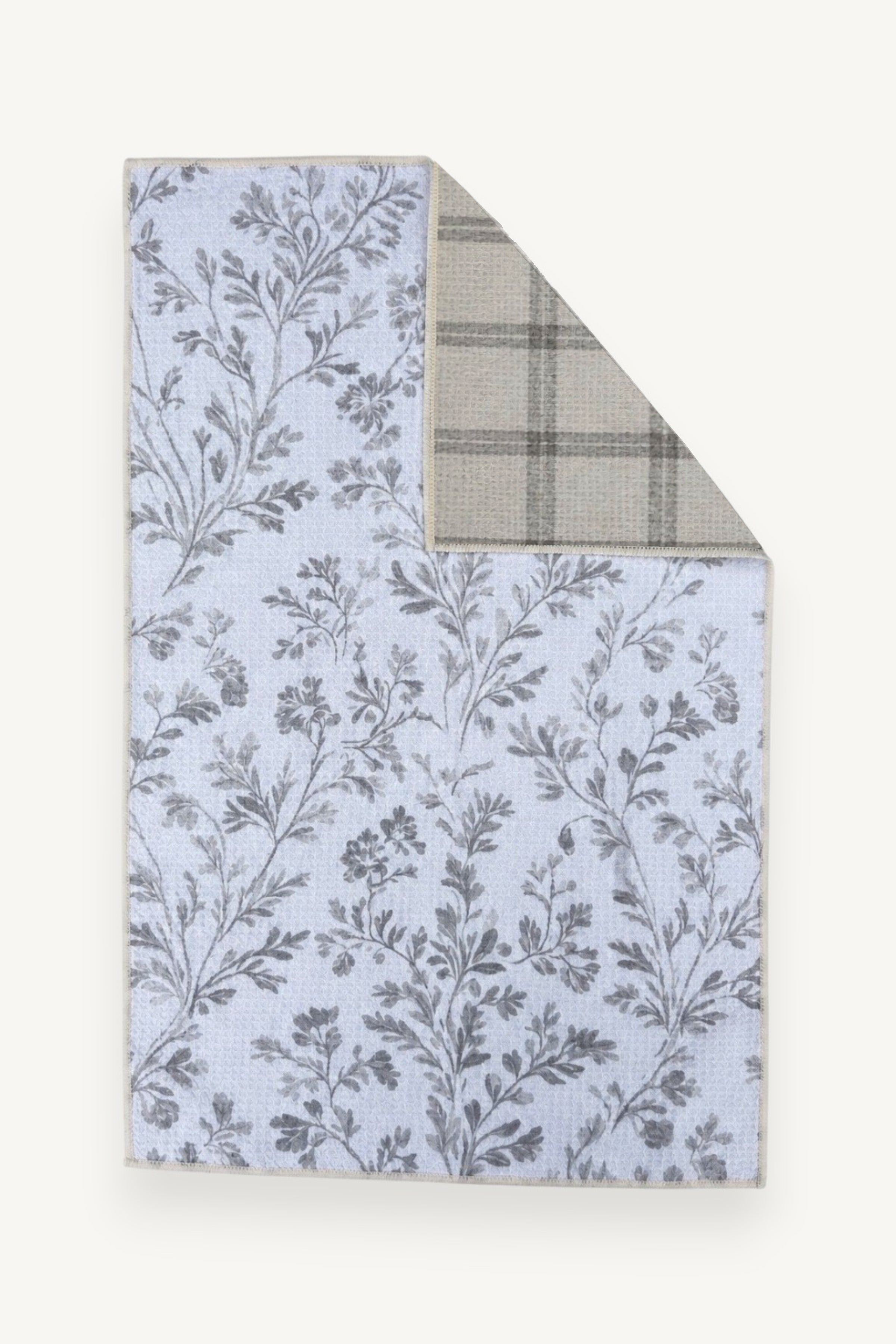
If your old towels have lost their absorbency, a reversible waffle weave towel like the general guidance on microfiber care approach is a simple way to refresh your set. Our Stone Cottage reversible waffle weave towel is made from waffle-weave microfiber and is a good replacement when a towel reaches the end of its life.
Troubleshooting Streaks, Lint, Odors, and Dye Transfer
Most waffle weave problems trace back to residue, heat, or cross-contamination. Work through the symptoms in the order below, since fixing residue first often clears the others.
Streaks on glass and counters. The usual cause is fabric softener film or too much detergent left in the fibers. Rewash the towel with no softener and about half the detergent, add a half-cup vinegar rinse, and air dry.
Lint and fuzz. New waffle weave sheds loose fibers for the first few washes. Wash new towels apart from lint-heavy items, shake them out before drying, and clean the dryer lint screen between loads.
Musty or sour odors. Trapped oils and damp storage cause smells. Wash with warm water and a vinegar rinse, then dry fully before folding.
Dye transfer and color bleed. Wash new or brightly colored towels separately in cool water for the first two or three washes. If color has already transferred, rewash promptly in cool water; heat sets dye permanently.
Reduced absorbency. Residue buildup is the most common cause. Strip the towel with a warm wash, no detergent, and a half-cup vinegar rinse, then air dry.
Stiff feel. Stiffness is almost always leftover soap or mineral buildup. Cut the detergent dose, add an extra rinse, and avoid overloading the washer.
Watch out: Do not treat odors with bleach or hot water, since both can damage microfiber and set stains rather than remove them.
Keeping Your Clean Towels Ready for Your Next Gift or Kitchen
Once towels are clean and dry, store them flat or folded in a dry drawer, away from grease and steam. Keep light-colored towels away from the stove so they do not pick up oil.
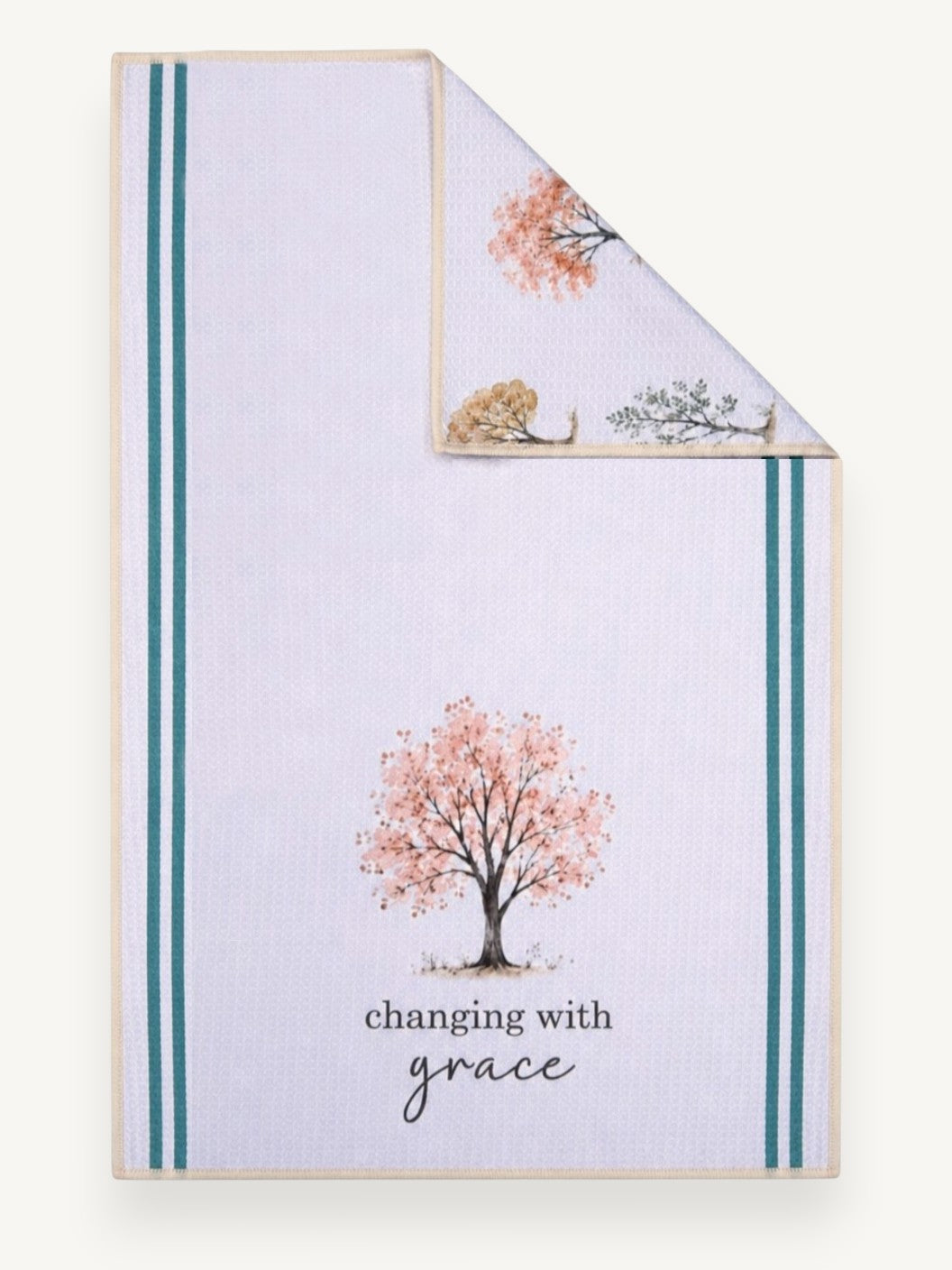
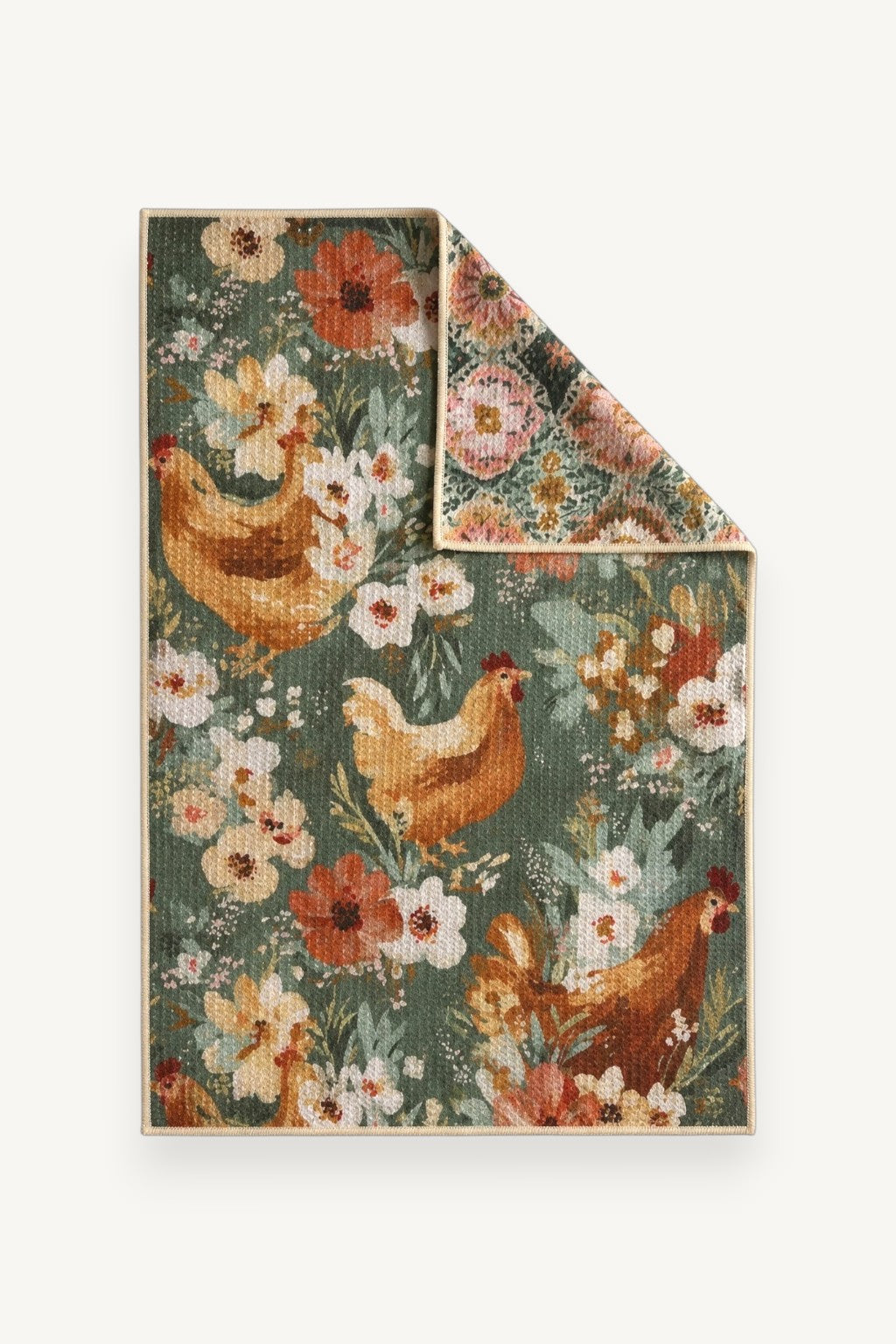
Clean towels also make thoughtful gifts. Our Changing With Grace reversible waffle weave kitchen towel and Golden Roost reversible waffle-weave kitchen towel both suit hostess gifts and housewarmings, and each comes with two designs in one towel.
Good care keeps waffle weave towels soft and absorbent for years. Wash them on warm or cool, skip the softener, dry on low, and they will keep doing their job in your kitchen.
Frequently Asked Questions
Can you put waffle weave towels in the dryer?
Yes, on low heat or no heat. High heat can flatten the waffle texture and damage microfiber.
Should you use fabric softener on waffle weave towels?
No. Fabric softener coats the fibers and reduces absorbency.
How often should you wash kitchen towels?
Wash them after heavy use, such as greasy cooking or drying dishes, and at least once a week.
Frequently Asked Questions
Can you wash waffle weave towels with regular laundry?
You can wash waffle weave towels with other microfiber items, but keep them separate from towels that shed lint, such as cotton terry, because lint clings to the waffle texture and is hard to remove. Wash them in a machine on a gentle or normal cycle with warm or cool water and a liquid detergent made for microfiber. Avoid fabric softener and bleach, which coat the fibers and reduce absorbency. Turning towels inside out before washing helps protect the surface from friction.
Can fabric softener make waffle weave towels less absorbent?
Yes. Fabric softener leaves a waxy residue that coats microfiber fibers, which makes them less absorbent and can cause streaking on glass. Skip it entirely for these towels. If your towels already smell or feel stiff from softener buildup, wash them with a half cup of distilled white vinegar in the rinse cycle, then run a second rinse with no detergent to clear the residue.
How often should you wash waffle weave kitchen towels?
Wash kitchen towels after they have dried dishes, wiped raw meat juices, or picked up grease, and at least every few days if they are in regular use. Towels used for glass or car detailing should be washed separately after each session to prevent oily residue from building up. Frequent washing with the right detergent and low heat drying keeps the fibers soft and absorbent over many washes.
Can waffle weave towels be washed with microfiber towels?
Yes, waffle weave towels are a type of microfiber, so they can go in the same load as other microfiber towels that have similar lint and dye profiles. Do not wash them with cotton or towels that release lint, and keep them away from towels that have been used on heavy grease or wax, so the fibers stay clean and absorbent.

